Peptide Gelling & Clouding Research Guide: Solubility Solutions
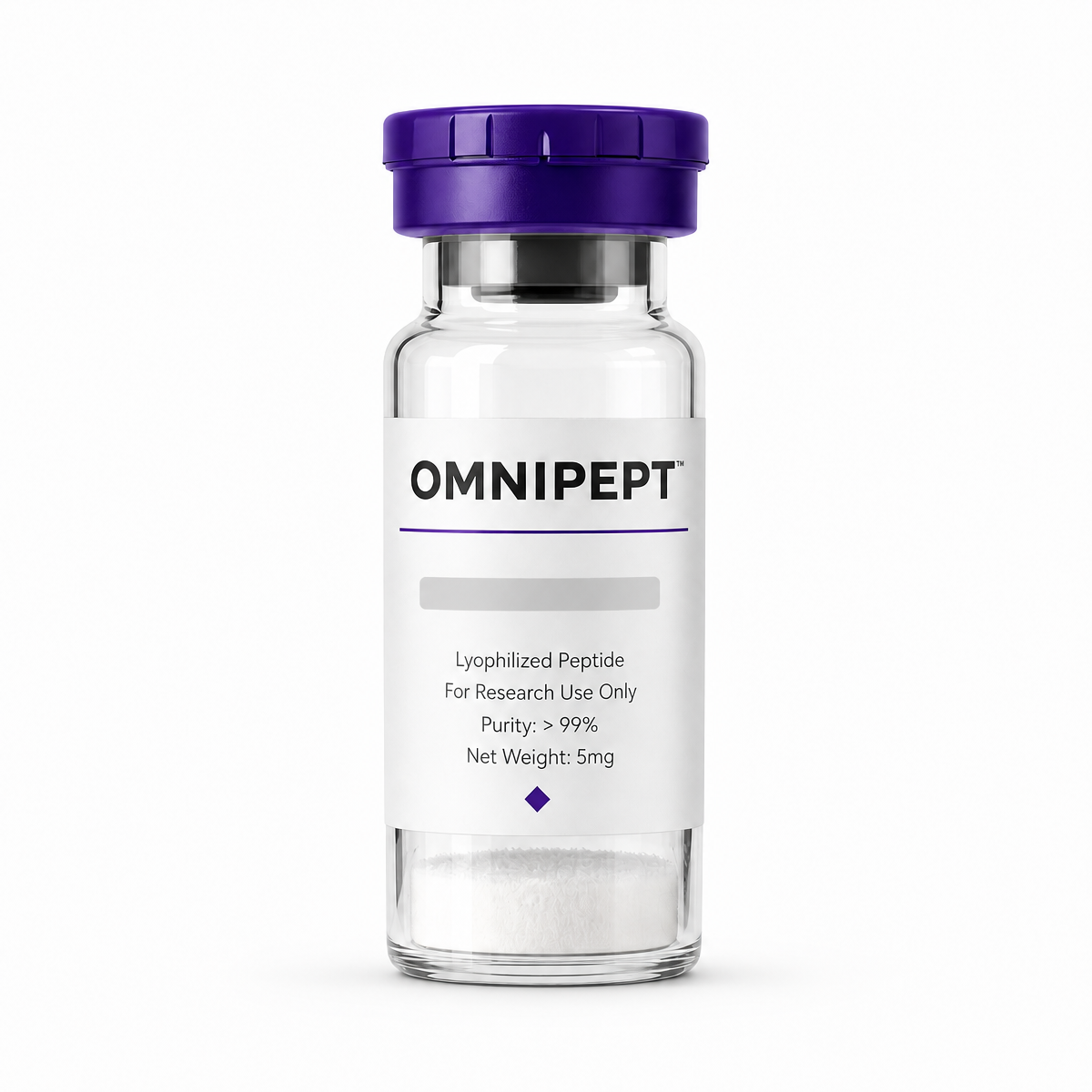
Research Use Only. This article is for informational purposes for qualified researchers. Compounds discussed are not drugs or supplements and are not for human or veterinary use.
Overview
Research‑Use‑Only Notice : All content on this website and all product information are for educational and informational purposes only. All products referenced are for laboratory research, analytical, and in‑vitro use only. They are not medicines or drugs, have not been evaluated or approved by the FDA, and are not intended to diagnose, treat, cure, or prevent any disease. Any bodily introduction into humans or animals is strictly prohibited.
Newly reconstituted peptides occasionally appear cloudy, gelatinous, or particulate in aqueous buffer. Labs and qualified researchers unfamiliar with peptide chemistry sometimes interpret this as a quality defect on the lyophilized starting material. In most cases, the appearance reflects normal aggregation behavior of peptides rich in hydrophobic amino acid residues when those peptides are introduced to a neutral pH aqueous medium without an appropriate co-solvent or pH adjustment.
This article describes the underlying chemistry, summarizes published in-vitro solubilization references, and points qualified researchers to peer-reviewed handling guidelines. It is not a step-by-step preparation protocol for any biological model and does not address routes of administration.
| Sequence character | GRAVY index range (typical) | Common primary solvent class in analytical literature |
|---|---|---|
| Strongly hydrophilic (high content of charged residues) | Strongly negative | Ultrapure water (resistivity at least 18.2 megohm centimeter) |
| Mixed character | Near zero | Ultrapure water; assay-specific buffer (PBS, Tris, HEPES) |
| Hydrophobic | Positive | Dilute acetic acid (0.1 to 1 percent in ultrapure water); low-percentage DMSO co-solvent |
| Strongly hydrophobic with self-assembly tendency | Strongly positive | Acid pre-dissolution followed by dilution into assay buffer; or DMSO followed by buffer dilution |
1. Why high-purity peptides aggregate in neutral water
Solubility of a peptide in aqueous medium is determined by the sequence’s amino acid composition, the surface charge distribution, and the pH of the solvent relative to the peptide’s isoelectric point (pI). Peptides rich in non-polar residues such as tryptophan, phenylalanine, isoleucine, leucine, valine, and methionine present a high proportion of hydrophobic surface area. In neutral aqueous buffer, these surfaces minimize their contact with water by self-association, producing visible turbidity, particulate suspensions, or, at higher peptide concentration, hydrogels.
The hydropathy of a sequence can be estimated from the Kyte-Doolittle hydropathy index and the GRAVY (Grand Average of Hydropathy) score. Sequences with positive GRAVY values tend to require either a co-solvent (such as DMSO at low percentage) or pH adjustment to remain monomeric in aqueous buffer. Sequences with strongly negative GRAVY values typically remain soluble in plain ultrapure water.
For peer-reviewed background on hydrophobic-face-driven peptide hydrogelation, see Pochan and colleagues’ work on beta-hairpin peptide self-assembly (PubMed) and the broader literature on amphipathic-helix aggregation behavior.
2. The role of pH in monomerizing aggregated peptides
Acidic conditions (low pH) protonate basic side chains (lysine, arginine, histidine) and carboxylic acid groups, producing net positive charge on the peptide and electrostatic repulsion between molecules. This repulsion opposes the hydrophobic attraction that drives aggregation. The net effect is that a sequence that gels in neutral water often becomes monomeric and visually clear once the pH is reduced one to two units below the peptide’s pI.
Dilute acetic acid in the range of 0.1 to 1 percent (v/v) in ultrapure water is the most commonly cited primary solvent in the analytical literature for hydrophobic peptide standards. Researchers should consult their institutional safety officer for handling of concentrated glacial acetic acid (corrosive; GHS H314). All laboratory acid handling should occur in a chemical fume hood with appropriate personal protective equipment.
The table below summarizes how peptide hydropathy commonly maps to recommended primary solvent classes in published analytical-method literature. This is a generic chemistry reference and is not a preparation table for any specific product.
3. General hydrophobicity reference
GRAVY index range (typical)
Common primary solvent class in analytical literature
Strongly hydrophilic (high content of charged residues)
4. General in-vitro solubilization references
Ultrapure water (resistivity at least 18.2 megohm centimeter)
Ultrapure water; assay-specific buffer (PBS, Tris, HEPES)
Dilute acetic acid (0.1 to 1 percent in ultrapure water); low-percentage DMSO co-solvent
5. Common appearance states and their analytical interpretation
Strongly hydrophobic with self-assembly tendency
Acid pre-dissolution followed by dilution into assay buffer; or DMSO followed by buffer dilution
Specific solubility behavior for any individual peptide should be determined empirically against the batch Certificate of Analysis and the published method literature for that compound. The values above are reference ranges, not specifications.
6. Storage considerations for reconstituted samples
The following references describe how the published analytical-method literature handles hydrophobic peptide solubilization in vitro. None of the steps below describe or imply a route of administration. They describe sample preparation for analytical assays.
Pre-dissolution in dilute acid. Many laboratory methods for hydrophobic sequences begin with a small volume of dilute acetic acid (commonly 0.1 to 1 percent v/v in ultrapure water) sufficient to wet the lyophilized material and produce a clear solution. The volume is typically a fraction of the final assay volume.
Final dilution into assay buffer. Once the peptide is in clear solution in the acidic medium, the sample is diluted to the final assay concentration in the buffer specified by the published assay (for example, phosphate-buffered saline for surface-plasmon-resonance binding assays, or DMEM with serum for certain cell-based readouts). The acidic pre-dissolution often allows the peptide to remain in solution after dilution into a higher pH buffer.
Frequently Asked Questions (chemistry only)
Co-solvent alternative. Some hydrophobic peptides are pre-dissolved at high concentration in research-grade dimethyl sulfoxide (DMSO) before dilution into the final assay buffer. Final DMSO concentration in cell-based assays should not exceed the cytotoxicity threshold for the chosen cell line (commonly less than 0.5 percent for sensitive lines).
Concentration determination. Concentration in solution should be confirmed after preparation by an orthogonal analytical method such as absorbance at 280 nanometers (for peptides containing tryptophan or tyrosine), micro-BCA, or quantitative HPLC against an authentic standard.
Researchers should follow the analytical-method literature specific to their compound of interest and their institutional Standard Operating Procedures. The above references summarize common practice; they are not OmniPept Global protocols.
Why does a high-purity hydrophobic peptide appear cloudy in plain water?
The following describes physical states that have been observed and characterized in the in-vitro literature on hydrophobic peptide aggregation. These observations are descriptive, not prescriptive.
Clear solution. The peptide is monomeric or in small soluble oligomers; suitable for downstream analytical readouts.
Turbidity (visible cloudiness). Indicates the formation of soluble or insoluble aggregates with particle sizes that scatter visible light. The published literature attributes this to the sample pH approaching the peptide’s pI, to insufficient acidic pre-dissolution, or to a peptide concentration above the critical aggregation concentration.
What grade of acetic acid is appropriate for laboratory peptide solubilization?
Particulate suspension. Visible flakes or fibers consistent with self-assembled aggregates. May indicate that the sample has crossed from a soluble state into a precipitated state and may not be recoverable by simple re-acidification.
Hydrogel. A space-spanning network in which the peptide molecules have self-assembled into beta-sheet-rich fibrils. The hydrogel literature (see Pochan and colleagues) describes this as a designed outcome for certain beta-hairpin peptides, not a defect. For sequences not designed to gel, a hydrogel state typically indicates that concentration plus pH conditions favored fibril formation over monomeric solution.
In each case, the analytical interpretation should be informed by the Certificate of Analysis purity data, the published assay method for the compound of interest, and the researcher’s institutional analytical-method validation procedures.
Are DMSO and acetic acid interchangeable as solubilization solvents?
Reconstituted peptide samples in dilute acid generally degrade more slowly under refrigeration (commonly cited at 2 to 8 degrees Celsius) than at ambient temperature. Storage at lower temperatures is recommended by analytical-method literature for short-term sample preservation between assays. Freeze-thaw cycles can cause freeze-concentration effects in acidic solutions that may compromise peptide integrity; the published literature commonly recommends single-use aliquots over repeated freeze-thaw of a single stock.
Researchers should refer to the batch-specific Certificate of Analysis for the manufacturer’s analytical stability data and to their institutional Standard Operating Procedures for sample handling.
This article describes generic in-vitro chemistry and does not address compounding-pharmacy, prescription, or any other clinical pathway.
Where can qualified research personnel source analytical-grade reference materials?
Hydrophobic side chains minimize their contact with water by self-association. In neutral pH ultrapure water this self-association can produce visible turbidity, particulate suspensions, or gels at higher concentrations. The appearance commonly reflects normal aggregation behavior of hydrophobic sequences, not a defect in the lyophilized starting material. Confirmation requires orthogonal analytical methods (HPLC purity, mass spectrometry identity).
Glacial acetic acid (typically greater than or equal to 99.7 percent, ACS Reagent grade) diluted to the working concentration in ultrapure water is standard for analytical sample preparation. Glacial acetic acid is corrosive (GHS H314); handling requires a chemical fume hood and appropriate personal protective equipment. Researchers should consult their institutional safety officer.
They are not interchangeable. DMSO is a polar aprotic solvent that solubilizes hydrophobic peptides through favorable van der Waals interactions; acetic acid solubilizes by protonating basic residues and inducing electrostatic repulsion. The published analytical-method literature for a given peptide typically specifies one or the other. The final assay buffer compatibility also differs: residual DMSO has cytotoxicity considerations in cell-based assays, while residual acid affects pH-sensitive assays.
Scientific References
Analytical-grade peptide reference materials with batch-specific HPLC and mass spectrometry Certificates of Analysis are available from specialty research-supply firms, including OmniPept Global. Material is supplied for in-vitro laboratory research only. Qualified research personnel and institutions can review the public Certificate of Analysis library before procurement.
Researchers should consult the primary peer-reviewed literature for any specific compound of interest. Citations above are illustrative of the published in-vitro chemistry on hydrophobic peptide aggregation and are not specific to any compound in the OmniPept Global catalog.
Disclaimer: The information provided in this article is for in-vitro laboratory research only and is not intended for human or veterinary use. Nothing in this article is medical advice. Researchers must comply with all applicable federal, state, local, and institutional regulations and must obtain all necessary approvals prior to any experimental work.
Similar Posts
The OmniPept Global Analytical Team is an editorial and analytical group at OmniPept Global. The team reviews preclinical research literature, interprets Certificates of Analysis (COAs), and writes about analytical quality standards, with the goal of making purity verification and third-party testing data accessible to qualified research personnel and institutions. The team's work is editorial and analytical, focused on chemistry, sequence data, and COA documentation; nothing it publishes constitutes medical, veterinary, or clinical guidance.
Quick answer: HPLC measures how pure a peptide sample is, reported as the percentage of the target compound. LC-MS measures the molecule’s mass to confirm it is the compound named on the label. A complete Certificate of Analysis reports both, because a sample can be 99% pure and still be the wrong molecule. HPLC peptide…
Read More HPLC vs Mass Spectrometry: What Peptide Tests Prove Continue
HPLC vs Mass Spectrometry: What Peptide Tests Prove
Historical supplier pricing or fulfilment details from the source article were removed because they are not current OmniPept Global catalog data. Buyers should request a current quotation and destination-specific freight information.
Read More Where to Buy BPC-157 in 2026: 9 Research Peptide Suppliers Compared Continue
Freeze-dried peptides stay stable for 2 to 5 years frozen at -20 °C (-4 °F) and 12 to 24 months in a fridge. At room temperature, expect weeks to a few months. Transit heat is rarely the problem: one to two weeks of ambient shipping causes no meaningful loss, and seven months at 45 °C…
Where to Buy BPC-157 in 2026: 9 Research Peptide Suppliers Compared
Read More How Long Do Peptides Last in Powder Form? Continue
Historical supplier pricing or fulfilment details from the source article were removed because they are not current OmniPept Global catalog data. Buyers should request a current quotation and destination-specific freight information.
Read More Where to Buy CJC-1295/Ipamorelin in 2026: 10 Research Suppliers Compared Continue
How Long Do Peptides Last in Powder Form?
Where to buy MOTS-c in 2026 comes down to a question most suppliers would rather not answer: who tested this specific vial, and will they show the paperwork. Nearly every supplier in this category advertises MOTS-c at roughly 99% purity, so the advertised figure separates almost nobody. What separates them is whether that figure is…
Read More Where to Buy MOTS-c in 2026: 9 Research Peptide Suppliers Compared Continue
A peptide Certificate of Analysis, or COA, is a quality-assurance document. It is a report from an independent laboratory that confirms a batch of research peptide was tested, and it records the identity, purity, and contaminant results. In short, it is how a “99% pure” claim becomes something you can verify instead of taking on…
Where to Buy CJC-1295/Ipamorelin in 2026: 10 Research Suppliers Compared
Read More What Is a Peptide Certificate of Analysis (COA)? Continue
Your email address will not be published. Required fields are marked *
Save my name, email, and website in this browser for the next time I comment.
Where to Buy MOTS-c in 2026: 9 Research Peptide Suppliers Compared
What Is a Peptide Certificate of Analysis (COA)?
Leave a Reply Cancel reply
Verify before you buy
Every batch we release has a public certificate of analysis. Match your lot number to its report.